Between March 9 and 15, unauthorized drones flew multiple missions over Barksdale Air Force Base in Louisiana. They operated over B-52 bombers for nearly a week. The flights showed sophisticated evasion patterns—entering and exiting in ways designed to avoid operator detection.
The security systems did exactly what they were designed to do. They recorded everything.
The United States needs to repeal laws from 18 Code US 32 that protect drones by treating them like civilian aircraft. The legal framework designed to protect air travel now shields potential enemy combatants conducting reconnaissance over strategic military assets.
The Legal Framework Protects the Threat
Current law makes it illegal to shoot down a drone flying over your house while your family plays outside. If you had a net or another safe method to take it down, the law prosecutes you—not the operator invading your privacy. Even when punishment exists for drone operators, it’s typically a slap on the wrist for flight pattern violations, not for being a flying peeping Tom.
The cost-benefit analysis is backwards.
Consider a football stadium with 80,000 people. If you disable or shoot down a drone carrying explosives, some people might be injured or killed when it crashes. But is that calculation wrong if you prevent it from crashing into the stadium where casualties would be exponentially greater?
For critical infrastructure, the stakes are even higher. If a drone flies over a water treatment facility, the choice becomes clear—shoot it down even if it falls on a worker, because that’s better than allowing the water supply to be poisoned. These aren’t comfortable scenarios, but they’re the real decisions passive security forces us to avoid.
Advisory guidance from the FAA, DOJ, DHS, and FCC states that “capabilities for detecting and mitigating UAS may implicate federal criminal laws relating to surveillance, accessing or damaging computers, and damage to an aircraft.” The law treats reconnaissance drones over nuclear assets the same as commercial aircraft.
What Active Interdiction Could Have Done
When Luminous Pillars launched IntelliLight, the legal wall surrounding drones was apparent. Some potential customers said if they had to use IntelliLight’s capabilities to target drones, they’d ask for forgiveness rather than permission. But the reality became immediately clear—drone technology and usage are light years ahead of the law.
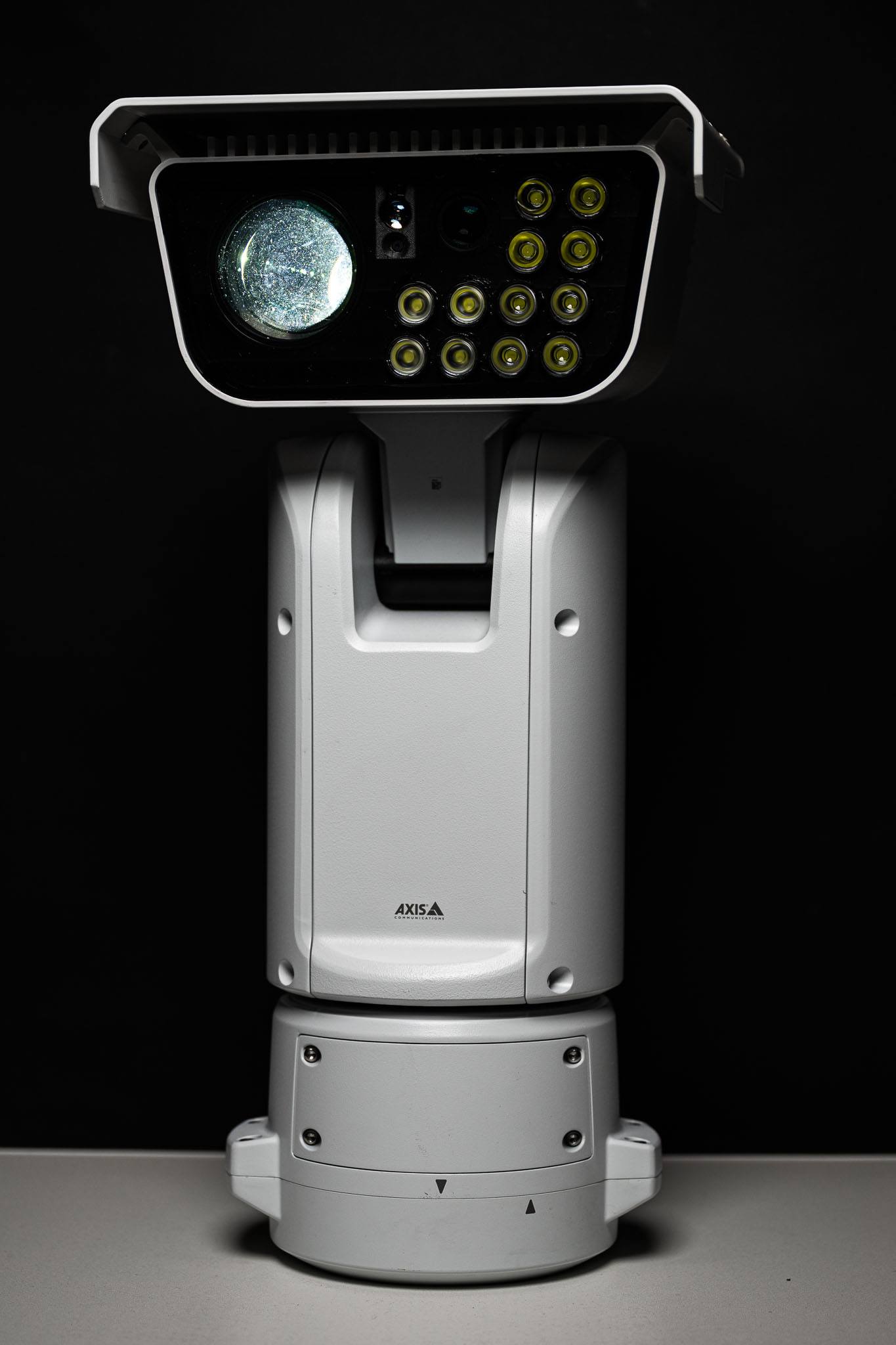
If legal constraints didn’t exist, IntelliLight could assist in identifying the drone using white LED illumination, then use its green laser to target the drone’s CMOS sensor—essentially blinding the drone’s vision system. This precision approach could force an early landing or prevent the operator from seeing the target and completing reconnaissance.
The effectiveness depends on the drone’s control method.
If the drone uses human-piloted control during its final approach—what’s called the “last mile” regardless of actual distance—blinding the CMOS sensor is highly effective. The pilot can’t see where they want to go. But if the drone operates on GPS coordinates or terrain mapping, you need either a more powerful laser or different interdiction technology like jamming systems.
Some advanced drones now use fiber optic flight control, similar to TOW missiles—a micro-thin fiber optic cable trails behind for command and control. A powerful enough laser could potentially melt that connection, though it would require significantly more power than systems normally provide.
Reading the Barksdale Flight Patterns
The sophisticated evasion patterns at Barksdale tell a specific story. These may not have been manually piloted flights—they were programmed reconnaissance missions.
Stopping GPS-guided drones requires interdiction well before they reach the base, or deployment of powerful lasers and jamming technology once they’re overhead. The more sophisticated the drone, the higher the cost—and adversaries face the same cost-benefit calculations defenders do.
Spending $50,000 on a drone you know will be sacrificed makes sense if you’re targeting a B-52. The ratio works. But for non-terroristic activities like drug delivery, that cost barrier becomes prohibitive. Making interdiction harder forces adversaries to use more expensive drones, which creates a natural denial mechanism through economic pressure.
But at Barksdale, we’re talking about reconnaissance of strategic military assets by likely foreign adversaries. The cost-benefit calculation is completely different.
The Intelligence We Handed Over for Free
Passive security systems recording those drones did nothing to prevent mapping of the location. If those drones carried LIDAR terrain mapping functionality—and sophisticated evasion patterns suggest they might have—they were creating detailed terrain maps of the Air Force base while security systems documented it happening.
Asset locations. Defensive positions. Approach vectors. All collected without opposition.
The evasion patterns themselves were intelligence gathering. The way a target responds or doesn’t respond to drone flights reveals defensive posture. Every day those drones flew unchallenged, they collected both direct reconnaissance data and behavioral intelligence about security responses.
Passive security gave notification. It didn’t prevent intelligence from returning to whoever sent the drones.
According to ABC News, the drones came in waves lasting around four hours each day, displaying non-commercial signal characteristics and resistance to jamming. The electronic countermeasures at Barksdale—designed to disable GPS and datalinks—failed to work.
The Psychological Mechanism Behind Passive Acceptance
The security industry has trained itself to believe recording is the ceiling of what’s possible. This is learned behavior built on a simple logic chain: there’s no active interdiction we can think of except a person with a gun, therefore we’ll buy the best passive system available.
Camera manufacturers compete on who has better imagery, more powerful analytics, and better storage compression math. The commodity became the recording itself. The mindset became passive. Awareness became passive.
Between September 2023 and September 2024, drone incursions over military installations jumped 82% to approximately 420 sightings. More than 400 drone sightings over military installations were reported in the past year. This isn’t an isolated incident—it’s an accelerating pattern the industry has normalized.
A year ago, almost every detected drone proceeded unimpeded. Now about a quarter of detected drones get defeated. That means 75% of detected threats still complete their missions. Detection without prevention has become the standard operating procedure.
What Layered Security Actually Means
The best security systems combine active and passive approaches in layers. At Barksdale, a layered approach would have looked like this:
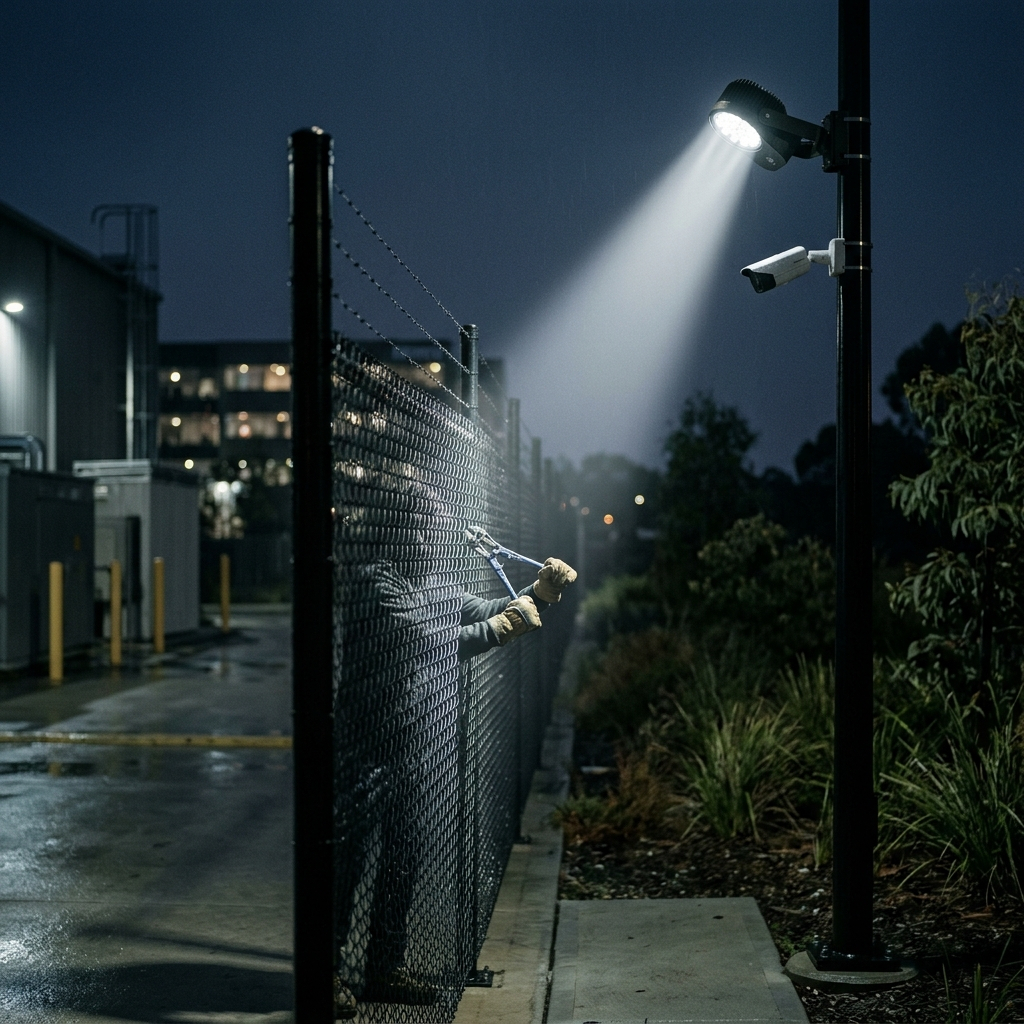
Perimeter sensors detect potential threats at maximum distance. Decision point: where do we start active interdiction? For a person walking toward a restricted fence line, maybe you use non-lethal light to signal they’re getting close. If they jump the fence, trigger active response—light-based deterrence combined with dispatching armed personnel.
The layering approach pushes threats outward and adds delay to the adversary’s timetable. This creates more opportunity for escalating responses from different systems.
Even when drones are already overhead—literally flying 100 feet over parked B-52s—you can still actively interdict them. You can still attempt to shoot them down and prevent collection of additional information. The sooner you stop them, the sooner they stop getting free intelligence about your protected asset.
Between December 2023 and June 2025, someone launched seventeen nights of drone swarms at Langley Air Force Base in Virginia. F-22 stealth jets had to be relocated because they were under threat. The military’s most advanced fighters retreated because passive security couldn’t oppose the threat.
The Wake-Up Call Commercial Facilities Are Missing
If you’re responsible for critical infrastructure security, you should look at Barksdale and think: if adversaries can get drones over an Air Force base with B-52s, what could they do to my facility that doesn’t have a tenth of the security resources?
This isn’t a military problem. It’s an everybody problem with different threat actors and different actions.
The wake-up call requires immediate analysis of security posture, then a risk-reward determination of how to improve it. The answer isn’t more passive systems. It’s not improved artificial intelligence analyzing camera feeds better. It’s an active response layer that works to protect facilities and stop potential threat actors before crimes or terrorist actions start.
Incidents of unwanted drone incursions at NFL games increased by more than 20,000% between 2017 and 2023. Commercial venues face the same vulnerability military installations can’t solve—detection without opposition.
The Awareness Problem
The single reason people aren’t adopting active security is shocking in its simplicity. Nobody thinks products exist that can provide active security.
Anyone who believes a speaker yelling a recorded message at potential threats—”Hey, we see you, go away”—is active security is deluding themselves. A person’s voice can’t push anyone over. That’s still passive security because it doesn’t physically oppose the threat.
This is an awareness problem. You can’t buy active security products if you don’t know they’re available to buy.
When people finally understand non-lethal active interdiction exists as a category, the first questions are predictable: How does it work? How does it integrate with current systems? Does it hurt people? How much does it cost?
Products like IntelliLight slot directly into existing passive systems and work in conjunction with them to improve overall security posture. The technology exists. The integration problems are solved. What’s missing is industry awareness that the category exists at all.
What the Industry Must Recognize
Barksdale wasn’t a technology failure. It was a philosophy failure.
The security systems performed exactly as designed—they detected, tracked, and recorded unauthorized drone flights over strategic military assets for nearly a week. The problem is that detection and recording were the ceiling of their capability.
The drones weren’t deterred. They weren’t stopped. They completed reconnaissance missions, tested defensive responses, and collected intelligence while passive security documented it happening.
The legal framework protects drones as civilian aircraft even when they’re conducting military reconnaissance. The industry has trained itself to believe recording is the best possible outcome. Decision-makers don’t know active interdiction technology exists because the category itself is new.
But the gap between what security claims to provide and what it actually prevents when adversaries are determined is now impossible to ignore. If passive security failed at Barksdale—a strategic installation with maximum resources and B-52 bombers—what makes commercial facilities and critical infrastructure operators think their passive systems are protecting anything?
The shift from observation architecture to opposition architecture requires three things: legal frameworks that allow active interdiction at critical sites, industry awareness that non-lethal active security technology exists, and decision-makers willing to add active response layers to their security posture.
The drones at Barksdale proved passive security has reached its operational ceiling. The question is whether the industry will recognize that before the next incident involves more than reconnaissance.